Worked All Europe DX Contest SSB 2026: the exchange, the QTCs, and how to log it
6 min read
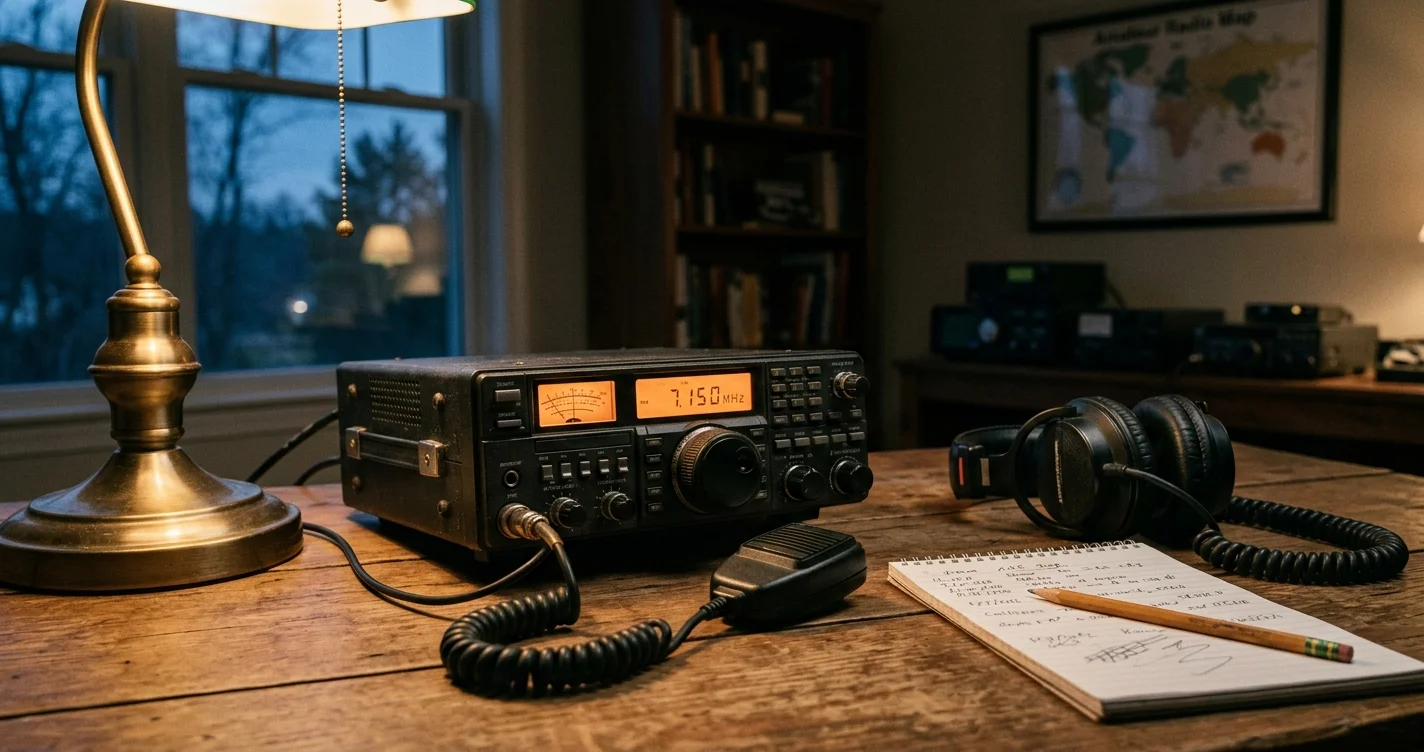
The phone leg of the Worked All Europe DX Contest runs from 00:00 UTC on Saturday 12 September 2026 to 24:00 UTC on Sunday 13 September — the second full weekend of September, which is the standing rule for the SSB leg.
It is the contest where Europe and the rest of the world only work each other — and the one where the log is not the whole score.
Who works whom, and on what
European stations work non-European stations, and that is it. Two Europeans calling each other score nothing; so do two Americans. Bands are 80, 40, 20, 15 and 10 metres. No WARC bands.
The exchange is the easy part: a signal report and a serial number, starting at 001 and counting up. 59 001, 59 002, and so on.
The part that catches people out: QTCs
WAE is not scored on QSOs alone. After working a European station, a non-European station can take QTCs from them — a short list of contacts that European station has already made, passed over the air and logged again at the receiving end. They are worth extra points, and at the top of the score table they are a large share of the total. How many you may take from one station, and how they are counted, is on DARC's rules page; read it there rather than trusting a summary, including this one.
QSL Buddy does not do QTCs. There is no QTC panel, no QTC in the score, and no QTC block in the exported log file. If you are outside Europe and you intend to run QTC traffic seriously, this app will log your QSOs and not your QTCs, and you should plan for that before Saturday rather than at 02:00 on Sunday. If you are in Europe, or you are working the contest casually for the DXCC entities, the gap costs you nothing.
That is the honest headline. Here is what does work, end to end.
Logging it in QSL Buddy
Unlike a lot of the contests in the contest calendar, WAE SSB has a real built-in definition, so you do not have to fake it with a generic session.
- Open the contest calendar. The Worked All Europe DX Contest - SSB row is there with its UTC window, your local window beside it,
Exch: RST + Serial Number, the bands, and a link to the rules. Because the contest is built in, that row carries a Start Session button — one click and the setup is pre-filled with the right contest. - Fill in your callsign, grid, and the Cabrillo categories — operator, assisted, band, mode, power, station, transmitter. They go straight into the log header, so doing it now saves editing the file later.
- You do not set a sent exchange. The setup screen says "Serial numbers auto-increment", and it means it: the app builds
001,002,003for you as you log, zero-padded to three digits. - Log. Type the callsign — the field turns green for a new station and red for a dupe on that band, live as you type. Callsign suggestions appear underneath as you go, each one showing which bands you have already worked that station on, with the current band flagged and worked dupes struck through, so you can see at a glance whether a partial call is a new multiplier or a waste of a call. Arrow keys walk that list; Tab or Enter picks one.
- Space in the callsign field jumps you to the exchange field. Type the serial you received — digits only, the field refuses anything else — and Enter logs the QSO and puts you back on the callsign.
- If your radio is on CAT over Web Serial, frequency, band and mode come off the rig onto each QSO, so a band change does not need a keystroke.
Dupes are counted per callsign per band, which is the WAE rule.
Read the score panel for what it is
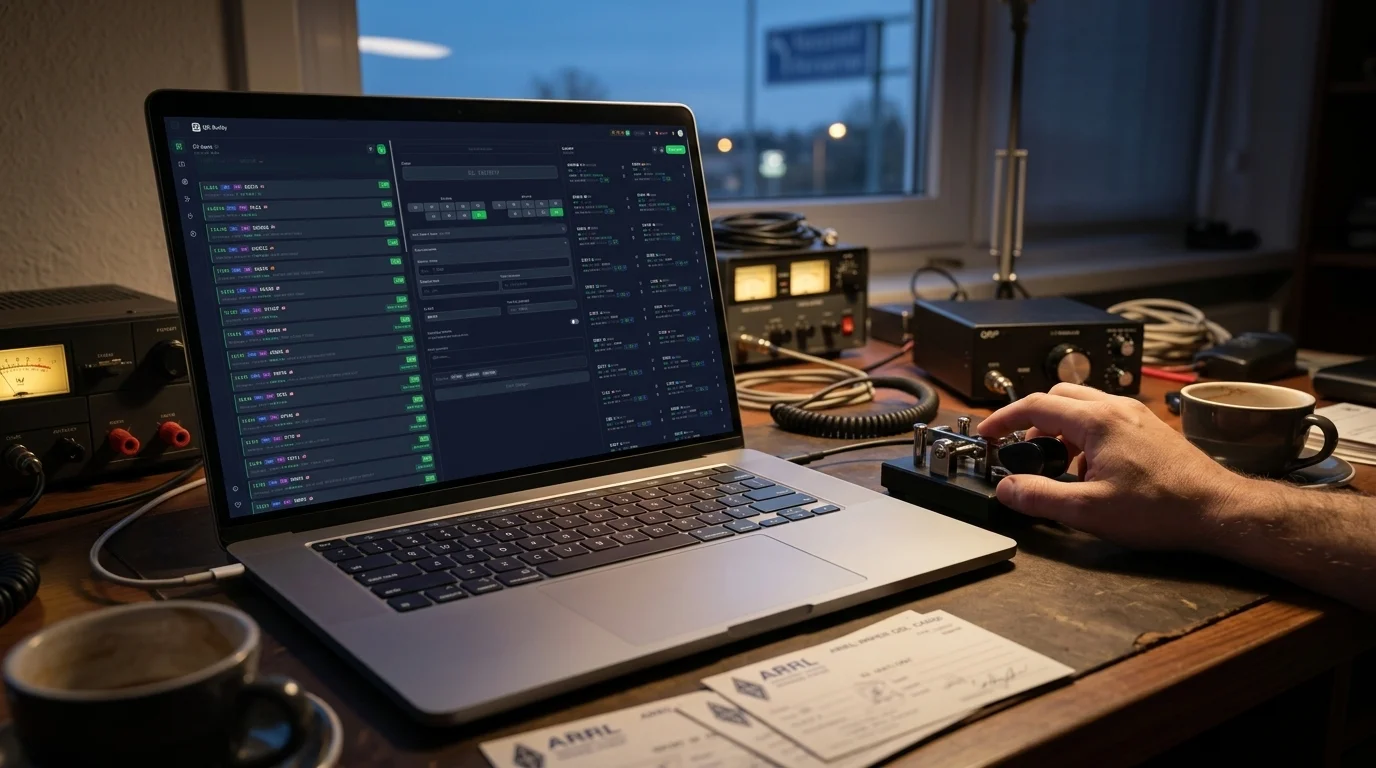
The score panel gives you one point per non-dupe QSO, counts multipliers per band, and multiplies the two together. It is a live, useful, roughly-right number — and it is not your WAE score. Three reasons, all of them worth knowing before you argue with the results:
- No QTC points. As above. If you work QTCs, the app cannot see them.
- Multipliers are counted from the callsign prefix, as a stand-in for the DXCC entity. Most of the time those agree. Sometimes they do not — several German prefixes are one DXCC entity, and the app will count them as several.
- No band weighting. WAE weights multipliers differently on the low bands than on the high ones; the app sums them flat.
Treat the panel as a rate and dupe display, which is what it is genuinely good for, and work your claimed score out from the rules page afterwards.
Sending the log to DARC
Open Export → Cabrillo and download the file. Because WAE SSB is a built-in definition, the header is already right: CONTEST: WAE-SSB, your categories, your grid, one QSO: line per contact in Cabrillo v3 shape with mode PH, date and time in UTC, both callsigns, both signal reports and both serials — and dupes left out of the QSO lines entirely.
Fix one line before you send it. CLAIMED-SCORE: is filled in from the app's own arithmetic, which for the three reasons above is not the WAE score. Open the file in any text editor and put your real figure in. There will also be no QTC block in the file; if you ran QTCs, this is not the log to submit.
Then use Merge to logbook to move the contest QSOs into your main log, where LoTW, QRZ.com and ClubLog can pick them up. Those integrations stay off until you enable each one yourself — nothing is uploaded anywhere you did not switch on.
If QTCs are what you need
QTC support is a real piece of work — a traffic panel, the receiving side, the extra Cabrillo block — and it is worth building for the operators who will actually use it. What decides whether it gets built before the CW leg next August is knowing that somebody wants it. If that is you, say so, and tell me which side of the exchange you are on.
QSL Buddy is free: no paid tier, no subscription, no trial, and nothing about contest logging behind a paywall. It is one person's project, so the honest answer to "does it do X" is sometimes no — as it is above. Good luck on the bands.